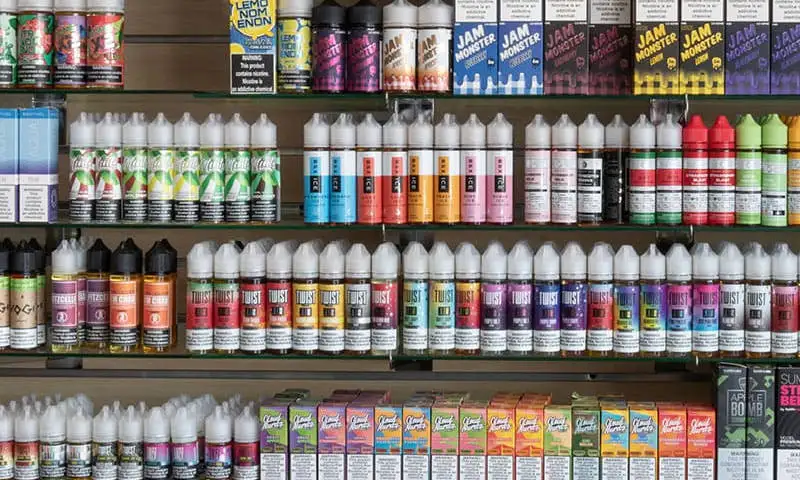

When BNN chief Suyudi Ario Seto presented the proposal to ban vaping devices under the Narcotics and Psychotropics Bill to DPR Commission III on April 8, 2026, the argument rested on one finding. Laboratory tests on 341 vape liquid samples revealed that 11 contained synthetic cannabinoids, one contained methamphetamine, and 23 contained etomidate, an anesthetic recently classified as a category II narcotic.
Those findings are real. Nobody in the legitimate vape industry is disputing them.
What is being disputed is the conclusion, that the presence of illegal drugs in some liquid samples justifies banning vaping devices entirely. This conclusion only holds if you treat three completely separate problems as one. And that conflation is the core of an argument that would eliminate a legitimate industry, erase IDR 2.65 trillion in annual government tax revenue, and do nothing to stop drug distribution.
The Three Core Problems
Before anything else, here is the complete picture in one place.
| Problem | Root Cause | Current Regulation | Targeted Solution |
|---|---|---|---|
| Device Safety | Electrical and hardware failure | SNI standards and UL 8139 | Product certification and import controls |
| Liquid Safety | Chemical formulation | PerBPOM 18/2025 | Lab testing and ingredient disclosure |
| Drug Adulteration | Criminal activity | Narcotics Law | Law enforcement and supply chain traceability |
Each problem has a different cause. Each has a different solution. None of them require banning the product category. Let us go through each one.
Device Safety
The vaping device is a consumer electronic product. It contains a lithium-ion battery, a heating element, and in regulated devices, a circuit board with safety features. Like any consumer electronic product, it carries safety risks when it is poorly manufactured or used incorrectly.
Mechanical mods are unregulated devices containing no circuit board, no chip, and no safety protections. When the button is pressed, the battery delivers power straight to the coil without electronic control, which means risks such as short circuits or battery venting can occur. Regulated vape mods introduced circuit boards and chipsets to control power output, including short-circuit protection, overheat monitoring, and low voltage cut off.
The UL 8139 standard evaluates the safety of the electrical, heating, battery, and charging systems of vaping devices. It is worth noting explicitly that UL 8139 does not apply to consumables such as e-liquids, wicks, and other particulate matter, and does not consider the physiological or psychological effects of any consumables used with the product.
This separation exists in the regulatory standard itself because engineers who write device safety frameworks understand that a battery overheating is a hardware engineering problem. It has nothing to do with what is in the liquid. The solution is product certification, import controls, and standards enforcement. This is already happening and has nothing to do with the BNN’s liquid adulteration findings.
Liquid Formulation Safety
Liquid safety is entirely separate from device safety and covers two distinct concerns.
The first is flavor compound safety. This is the concern behind the popcorn lung discussion and behind the CMR compound classifications. It is addressed by PerBPOM 18/2025, which requires full ingredient disclosure to BPOM and laboratory verified additive safety testing before products enter the market. The regulation exists. The framework is correct. The solution is implementation, not prohibition.
One clarification on popcorn lung is worth making here. Diacetyl, the flavor compound linked to bronchiolitis obliterans in factory workers, was inhaled at very high occupational concentrations over years of continuous exposure. To date, there has been no confirmed clinical case of bronchiolitis obliterans definitively linked to nicotine vaping in a consumer. The association between vaping and popcorn lung is theoretical and precautionary, not clinically confirmed. This is an important distinction when the industry is arguing for proportionate regulation.
The second liquid concern is CMR-classified compounds appearing in Indonesian market flavor concentrates. GC-MS testing of local samples has found compounds including diphenyl oxide and estragol that are prohibited in regulated export markets. This is a formulation problem with a formulation solution. Testing, documentation, and reformulation where prohibited substances are found. PerBPOM 18/2025 is the right mechanism. Ban the prohibited compound, not the product.
Drug Adulteration
This is the problem the BNN presented to DPR Commission III. It is real. It is also a completely different problem from both of the above.
Drug adulteration means someone has taken a legal product and added illegal substances to it. This is a drug distribution method. Drug traffickers have used virtually every other consumer product format throughout history. Nobody has proposed banning bottled water because drugs have been dissolved in it.
The closest international parallel is the EVALI crisis in the United States in 2019. The CDC concluded that vitamin E acetate, used to dilute black-market THC vaping cartridges, was strongly linked to the EVALI outbreak. Vitamin E acetate was identified in the lungs of EVALI patients including all 29 patients in a November 2019 study and 48 of 51 patients in a December 2019 study, but none of the 99 healthy participants in a comparison group.
Of the 2,506 reported EVALI cases, 80% reported THC use and 35% reported exclusive THC use. The outbreak was driven by illicit drug cartridges, not by nicotine e-liquid products. PubMed Central
The US federal government did not ban vaping devices. It identified the specific adulterant in the specific illicit product and pursued the illegal supply chain responsible. Several US states, including Massachusetts, Michigan, and New York, did impose emergency bans during the initial panic of 2019. Those bans were reversed when the evidence clarified that the cause was Vitamin E acetate in illegal THC cartridges, not vaping devices or nicotine liquid. The lesson is that panic driven policy based on conflated evidence produces bad outcomes that have to be walked back. Indonesia has the benefit of seeing that lesson play out before making the same mistake.
The BNN Numbers Need Context
Of the 341 samples tested, 11 contained synthetic cannabinoids, one contained methamphetamine, and 23 contained etomidate. That is 35 samples out of 341, a positivity rate of just over 10%. ECHA
What the BNN did not clarify is how those 341 samples were selected. A random audit of retail vape liquid in Indonesian shops would produce a very different positivity rate from a targeted collection of samples seized from suspicious sources or flagged by law enforcement intelligence. The difference between these two sampling methodologies is the difference between a systemic industry problem and a targeted criminal supply chain problem. The distinction matters enormously for the proportionality of the regulatory response.
A 10% positivity rate in a targeted law enforcement sample is not evidence that 10% of the Indonesian vape market contains drugs. It is evidence that drug traffickers are operating in parts of the supply chain that were already under suspicion. That is a law enforcement matter, not grounds for industry prohibition.
Etomidate Specifically Deserves Clarity
Etomidate is a anesthetic used in medical procedures for the induction of general anesthesia. Its recent classification as a category II narcotic in Indonesia means its presence in a liquid product is a serious criminal matter carrying serious penalties.
The industry’s response to etomidate in the BNN findings should not be defensive. It should be proactive. Call explicitly for etomidate’s specific inclusion in mandatory GC-MS testing panels for all liquid products. Call for maximum penalties for any producer or supplier found with etomidate in their supply chain. Its presence is deliberate criminal adulteration. Distinguishing loudly is exactly the kind of self policing that builds regulatory credibility.
The Gateway Question
The BNN and public health advocates opposing vaping often raise a behavioral concern, that vaping leads users toward harder drugs or back to cigarettes. Argument that is popular and has been debunked many times. Lets do it again.
The gateway argument has been tested extensively in the research literature. The evidence does not support a causal relationship between vaping nicotine products and progression to illicit drug use. Young people who experiment with multiple substances tend to try multiple things regardless of which one comes first. Correlation between vaping and other substance use in surveys reflects shared risk factors in the population, not a pharmacological gateway effect from nicotine vaping itself.
On the question of whether vaping leads back to smoking, the UK and New Zealand evidence cited in other articles on this site shows the opposite. Vaping is an effective smoking cessation tool at the population level. Removing it from the market pushes ex smokers toward relapse, not away from nicotine.
The Government’s Own Revenue Is at Stake
This is the argument that tends to get the attention of the ministries that matter most in a regulatory decision.
Indonesia’s Customs Directorate General reported that vape excise tax revenue reached IDR 2.65 trillion, approximately USD 165 million, in 2024, marking a 43.7% year-on-year increase from IDR 1.84 trillion in 2023. Officials projected continued growth in vape tax revenue for quite some time. Vape exports jumped from USD 289 million in 2023 to USD 324 million in 2024. Numbers from Wikipedia
The Ministry of Finance stated that 50% of revenues from the e-cigarette tax would be used for public health and law enforcement.
A total ban on vaping devices eliminates this revenue. The Ministry of Finance, which has spent years developing the excise framework for e-cigarettes and is projecting continued growth in collection, loses IDR 2.65 trillion per year in revenue and a growing export industry. The Directorate General of Customs and Excise loses a tax base that grew 43.7% in a single year.
This is an internal government conflict that the BNN proposal creates. The BNN is a law enforcement agency making a recommendation that directly contradicts the revenue interests of the Ministry of Finance. DPR Commission III, which oversees law enforcement, is pushing a proposal that has significant fiscal consequences that belong in the jurisdiction of other committees.
Why a Ban Makes the Drug Problem Worse
The most important argument is the one that is counterintuitive but factually correct.
A regulated vape industry with mandatory ingredient disclosure, and documented supply chains is the infrastructure that makes drug adulteration detectable and prosecutable. When every liquid batch has a documented compound profile, a product containing synthetic cannabinoids or etomidate can be identified, traced to its source, and used as the basis for criminal prosecution.
When the industry is banned, that infrastructure disappears.
Australia demonstrated this at a smaller scale after its 2024 prescription only crackdown. The compliant market contracted and the illicit market grew substantially to fill the gap. The public health outcome was worse, not better.
A ban on vaping does not eliminate drug distribution. It eliminates the regulatory infrastructure that makes drug distribution through vape liquid detectable.
What the Industry Should Demand
The industry does not need a ban. It needs a seat at the table.
Specifically, the industry should call for a joint working group involving BNN, BPOM, and the Ministry of Finance to implement mandatory testing as a market entry requirement for vape liquid products, with criminal penalties for any product found to contain narcotics, and full traceability requirements that link every batch to its ingredients and its manufacturer.
This framework turns the legitimate vape industry into a frontline defense against drug distribution rather than its victim. It gives BNN what it actually needs, which is a supply chain where adulterated products can be identified and prosecuted. It gives BPOM the ingredient transparency that PerBPOM 18/2025 already requires. It gives the Ministry of Finance the continued revenue stream. And it gives the legitimate industry the regulatory clarity it needs to grow.
Commission III member Abdullah already said the proposal should be carefully examined before any decision is made to avoid potential economic impacts, stressing that the livelihoods of small businesses must be considered. That opening is there. The industry needs to walk through it with evidence, with data, and with a concrete alternative rather than simply opposing what the BNN proposed.