
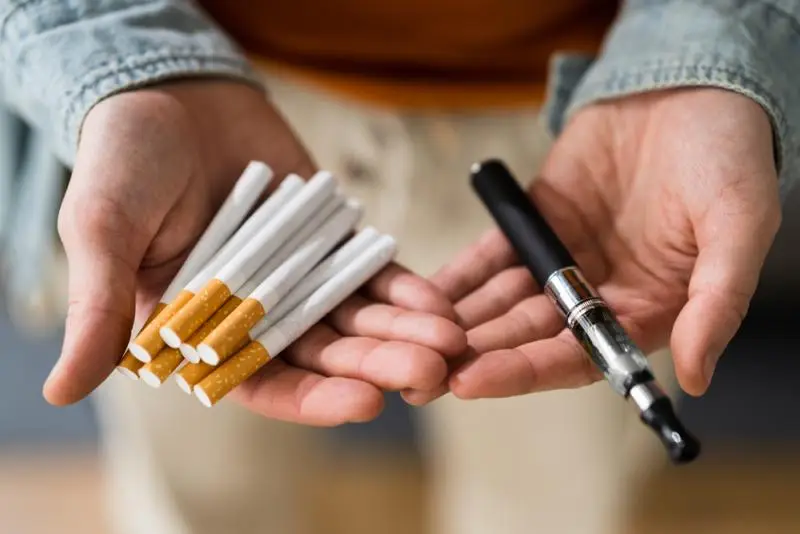
Indonesia has 75 million smokers. Every year between 240,000 and 300,000 Indonesians die from tobacco related illness. The healthcare system is paying a price the excise revenue does not come close to covering. Child smoking rates are rising. And the industry causing most of this damage continues to operate with minimal interference.
At the same time, the National Narcotics Agency (BNN) has formally proposed a total ban on vape devices in a hearing with the DPR, pushing to classify them under the new Narcotics and Psychotropics Bill. The justification: lab tests on 341 vape liquid samples found illegal substances in a number of them.
This article presents the evidence from countries that have actually tested the public health question rigorously, over years, at population scale. The UK, New Zealand, and Australia took different approaches. The results are documented. What they show is directly relevant to the conversation Indonesia needs to have right now.
What the UK Did and What Happened
In 1960, around 51% of British adults smoked. Decades of taxation, advertising bans, and cessation programmes brought that number down steadily. But the most dramatic shift came after the UK made a deliberate policy decision to treat vaping not as a threat but as a tool.
Successive UK governments endorsed vaping as a smoking cessation aid. The National Health Service provided evidence based guidance on the relative safety of vapes compared to cigarettes. In 2023, the government launched the Swap to Stop programme (a world first) offering approximately one million smokers a free vape starter kit alongside behavioural support.
The results are now a matter of official record. Confirmed by ONS data released in late 2025, Great Britain reached a historic tipping point. Approximately 5.4 million adults now consume nicotine primarily through vapes, compared to 4.9 million who smoke traditional tobacco. For the first time, more adults in Great Britain vape than smoke.
Between 2014 and 2023, adult vaping rates rose from 4.2% to 9.1% while smoking rates fell from 18.1% to 11.9%. A 6.2 percentage point reduction. More than half of current vapers, 53%, are ex-smokers who have switched completely.
The cessation data is equally striking. A survey conducted on behalf of Action on Smoking and Health found that 65% of people who gave up smoking in the last five years used a vape in their last quit attempt, representing approximately 2.7 million people. In NHS stop smoking services, quit attempts involving a vape succeeded at a rate of 64.9%, compared with 58.6% for those that did not.
The UK approach is not without nuance. NHS guidance recommends vaping only for adults as a cessation tool, and youth vaping has prompted targeted legislative responses. But the overall picture is of a country that treated the evidence honestly, made a pragmatic decision, and produced measurable results. The tipping point reached in 2025 is the outcome of that decision.
What New Zealand Did and What Happened
New Zealand’s story is in some ways more dramatic. The country set an ambitious goal under the Smokefree Aotearoa 2025 plan. To reduce the proportion of adult daily smokers to less than 5%. Vaping was placed at the centre of the strategy. The results followed.
The daily smoking rate fell from 16.4% in 2011 to 6.9% in 2023. A near-halving in just over a decade. This decline accelerated sharply from 2017, when the sale of nicotine containing e-liquids was authorised. In three years alone, 229,000 people stopped smoking, with vaping playing a central role. More than a third of those who stopped were Māori, a population group historically carrying a disproportionate burden of tobacco related disease.
The New Zealand Health Ministry’s position was explicit. The Department of Health stated that vaping is significantly less harmful than smoking and can help smokers quit. A dedicated government website was established to inform the public. It is the official position of a government health ministry, based on the same evidence base used by the UK NHS.
The 2024/25 New Zealand Health Survey provides an important addition to this picture. Daily vaping prevalence has stabilised at around 11.7%. Not continuing to rise. This is significant. It shows that vaping adoption among a population of former smokers reaches a natural level and holds there. The concern that legalising vaping would produce an endlessly expanding population of nicotine users is not what the data shows. What the data shows is a transition from a more harmful product to a less harmful one, that reaches an equilibrium.
What Australia Did and What It Reveals
Australia took a more restrictive path than the UK or New Zealand, and its experience reveals what happens when that restrictiveness goes too far.
Since July 2024, the import, domestic manufacture, supply, and commercial possession of non-therapeutic vapes and all disposable vapes has been prohibited. The original model required adult smokers seeking to use vaping as a cessation tool to obtain a prescription. The argument behind this framework was that vaping products should be treated as medicines and accessed through medical channels.
The outcome was not what the policy intended. The illicit vape market in Australia grew substantially after the prescription only model was introduced. Non compliant products, without safety testing, without any of the quality controls that regulated supply chains provide, flooded in through other channels. The people most affected were exactly the smokers the policy was designed to help.
Australia’s response to this outcome is instructive. In late 2024, the government softened its position. Adults can now purchase therapeutic vapes containing up to 20 mg/mL of nicotine from participating pharmacies without a prescription, provided they consult a pharmacist and the supply is clinically appropriate. Even the most restrictive regulatory model in the developed world had to acknowledge that prescription-only access was creating a barrier so high that it was counterproductive.
The Australian experience contains two lessons relevant to Indonesia. First: a regulated, documented vaping industry is preferable to prohibition not just from a commercial standpoint, but from a public health standpoint. When compliant products disappear from the market, non-compliant ones take their place. Second: even governments that initially chose the restrictive approach eventually had to loosen it. The question is whether Indonesia learns from that trajectory or repeats it.
The Cochrane Evidence
Behind the country level data is a body of clinical research that provides the scientific foundation for the policy decisions described above.
The Cochrane Collaboration, which conducts systematic reviews of healthcare evidence and is considered the gold standard for evidence synthesis in medicine, has reviewed the data on vaping as a smoking cessation tool. The findings are as follows.
High-certainty evidence shows that nicotine e-cigarettes increase quit rates compared to nicotine replacement therapy. Moderate-certainty evidence indicates they probably increase quit rates compared to e-cigarettes without nicotine. Evidence comparing nicotine e-cigarettes with behavioural support or no support also suggests benefit.
This is the evidence base the UK NHS and New Zealand Ministry of Health drew on. It is peer-reviewed, independently conducted, and publicly available. It is not industry-funded advocacy. It is the scientific consensus as assessed by researchers with no commercial interest in the outcome.
Why This Matters for Indonesia Right Now
Indonesia’s vape community is facing pressure from multiple directions simultaneously. The BNN’s formal proposal to classify vape devices under the Narcotics and Psychotropics Bill (based on the finding of illegal substances in a subset of 341 tested liquid samples) is the most serious regulatory threat the industry has faced.
This argument deserves a precise and direct response.
The presence of illegal drugs in some vape liquid samples is a law enforcement problem, not a product category problem. Drug traffickers have used virtually every available delivery mechanism throughout history. Food, pharmaceuticals, beverages. The appropriate response to drug-laced vape liquid is the prosecution of the people adding illegal substances and testing requirements for all products entering the market.
A total ban would not stop drug distribution. It would eliminate the legitimate industry, remove the regulatory infrastructure that makes testing and documentation possible, and push Indonesia’s millions of legal vape users toward unregulated alternatives with no quality control at all. The Australian experience demonstrated exactly this dynamic in a far more controlled market environment than Indonesia operates in.
Regulated vaping is a substantially lower-risk alternative to combustible tobacco. The evidence is clear.
Indonesia has 75 million reasons to take this seriously.
What the Vape Community Needs to Do
Knowing the evidence exists is not the same as using it. The vape community in Indonesia needs to be able to present it the most credible way possible. That requires doing the things that make the argument defensible.
Documentation first. Every product in the market needs compound-level documentation of its ingredients. Every batch needs to be traceable. This is what separates the legitimate industry from the drug-laced products the BNN cited in its DPR hearing. A producer who can demonstrate full documentation is making a categorically different argument from one who cannot. The industry is only as credible as its least credible member.
Coordinated advocacy. Individual producers making individual arguments to individual officials will not change the regulatory conversation. An industry association that can present safety data to relevant ministries, and make the harm reduction case with the same rigour as the public health communities that have already won in other countries, has a real chance of being heard. The PPEI exists for exactly this purpose and needs to use it.
Transparency with consumers. Indonesian consumers switching from cigarettes to vaping deserve accurate information about what they are using. Products with full ingredient disclosure, clear labelling, and verifiable safety documentation build the consumer trust that makes the public health argument concrete rather than theoretical.
Differentiate loudly from illicit products. The industry needs to make the distinction between compliant e-liquid and drug-laced counterfeit products absolutely explicit in every public communication. The BNN conflated them in a formal DPR hearing. The industry’s response cannot be defensive silence. It needs to be an aggressive, evidence backed case that the conflation is false, that it serves the interests of those who profit from keeping Indonesia’s 75 million smokers exactly where they are, and that the regulatory response to illicit products is enforcement and not prohibition of the legitimate industry.
Even Australia, the most restrictive example in this comparison, eventually acknowledged that barriers too high push people toward worse options.
Indonesia can make the same argument. The evidence is there. The international precedent is there. The question is whether the vape community will organise itself to make the case clearly enough, and credible enough, to be heard before the Narcotics and Psychotropics Bill moves further through the DPR.
The science is on the right side. The industry needs to be too.
Arkadia is a Bandung based importer and distributor of flavor concentrates for Indonesian vape manufacturers. Every product we supply comes with complete compound-level documentation. The foundation to push this harm reduction argument.