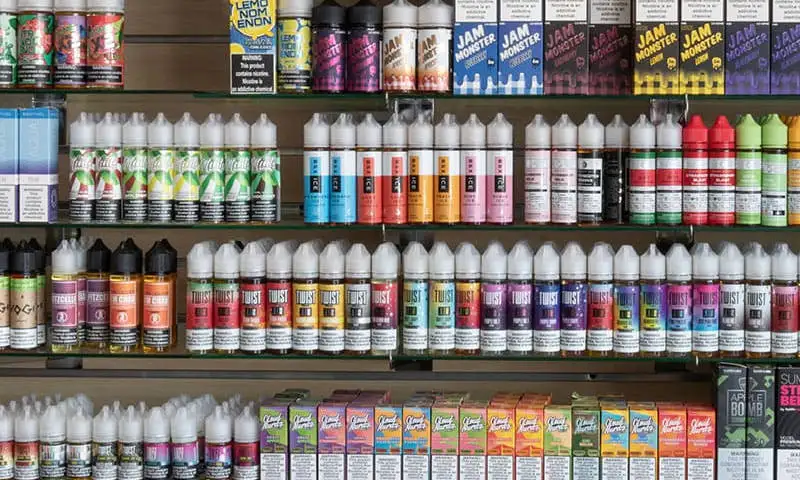

China produces over 90% of the world’s vaping products. We all know this. What is new is that the structure of that dominance is changing, faster than most people in the Indonesian vape industry are tracking. Three forces are reshaping the global vape supply chain simultaneously, and each one has direct consequences for Indonesian brewers who understand what is happening.
Force One: China Just Got More Expensive
From April 1, 2026, China cancelled its 13% VAT export rebate for nicotine containing e-cigarette products, covering finished vape devices, disposables, cartridges, and e-liquids under HS codes 2404120000 and 8543400090.
This rebate functioned as a built-in cost subsidy that allowed Chinese manufacturers to keep export prices low for vaping products worldwide.
Most Chinese factories operate on thin margins. Without the 13% tax buffer, manufacturers must raise FOB prices by 8% to 12% to maintain sustainability. Industry participants confirmed the change is forcing a reassessment of pricing and commercial terms across the board.
This affects Indonesian brewers in two specific ways that are worth separating clearly.
The first is hardware costs. Pods, devices, coils, and batteries imported from China are all subject to this pricing reset. Indonesian brewers who have not diversified their hardware sourcing will feel this directly in their production margins.
The second is nicotine costs. Indonesian brewers import pure nicotine and nicotine salts, the majority from China. Since China’s rebate removal covers all nicotine-containing products under HS 2404120000, the raw nicotine that Indonesian brewers import just increased in cost by 8% to 13%. Producers who have not secured alternative nicotine sourcing from India or other suppliers are absorbing this margin on every batch they produce.
Force Two: US Tariffs Are Pushing Chinese Manufacturers Into Indonesia
US tariffs on Chinese vape products peaked at a total rate of 170% during April 2025, forcing major manufacturing shifts toward Southeast Asian countries less affected by those tariffs, with Indonesia and Malaysia emerging as key manufacturing hubs.
According to data from the US International Trade Commission, imports of e-cigarettes from China accounted for 63.7% of US total imports during the first half of 2023, while imports from Indonesia represented over 35%, making Indonesia the second-largest supplier of e-cigarettes to the United States. Several notable manufacturers have already established factories in Indonesia, including Smoore, Mason Vap, Hive Workshop, Geekvape, and Jinjia.
The US reached a trade deal with Indonesia in July 2025 setting reciprocal tariff rates at 19%, down from the proposed 32% and drastically below the tariffs placed on Chinese goods.
The Batam Free Trade Zone deserves specific attention. Chinese companies operating inside Batam can import raw chemical components duty-free, assemble them using Indonesian labour, and ship them directly to the United States under an Indonesian Certificate of Origin. The product leaves Indonesia with Indonesian paperwork. It carries a 19% tariff rate, not a Chinese rate. The finished liquid is often made with cheap, undocumented flavor concentrates.
This is happening on Indonesian soil right now. Local brewers in Bandung and Jakarta are competing not just with imports from Shenzhen but with Chinese-owned operations that have transplanted the same low cost model into Indonesian free-trade zones while carrying the commercial benefit of Indonesian origin status.
Force Three: China Is Tightening Its Own Domestic Market
Chinese authorities announced in April 2026 a public consultation on mandatory national standards for heated cigarettes and heat-not-burn nicotine pouches. Classification first, then technical standard setting, then commercialization decisions only much later. These standards are the scaffold on which greater domestic control is being built, with an estimated development path of around 22 months.
China is also tightening controls over e-cigarette production capacity and investment domestically to address oversupply risks. The result is a faster shakeout across the Chinese supply chain, with smaller factories that relied on the VAT rebate to stay profitable facing serious pressure.
The era of unlimited cheap Chinese supply is not ending tomorrow. But it is under structural pressure from multiple directions simultaneously.
The Comparison
| Factor | Chinese Shenzhen Supply | Indonesian Compliant Brewer |
|---|---|---|
| Export tax structure | 13% subsidy removed April 2026 | Standard domestic tax structure |
| US tariff rate | Peaked at 170% | 19% under 2025 trade deal |
| Documentation standard | High volume, low transparency | GC-MS verified, compound-level |
| Raw nicotine cost trend | Rising after VAT rebate removal | Rising but diversifiable to India |
| Western buyer requirement | Frequently fails audit | Passes REACH and TPD scrutiny |
| Strategic position | Margin squeeze, volume competition | Premium, differentiated, export-ready |
What Indonesian Brewers Are Actually Facing
The threat is straightforward. Chinese manufacturers facing higher costs at home, tighter domestic regulation, and blocked US market access are looking at Southeast Asia as their next volume market. Indonesia, with 75 million smokers and a large informal retail sector, is an attractive destination for cheap finished liquid. The Batam operations described above are already here. The price competition from this source is real and it cannot be won on cost terms.
The opportunity is the mirror image. The same trade environment that enables Batam transshipment operations also means that Western importers are actively searching for credibly Indonesian, properly documented, compliant liquid products. These buyers come with specific requirements: REACH compliance files, TPD documentation, GC-MS results, Halal certification where relevant. They ask for these documents before they ask for samples.
The 19% tariff advantage is the same for both. The documentation determines who actually gets the order.
Domestic Enforcement
Indonesian regulatory deadlines have a history of shifting, and BPOM does not have a line of GC-MS machines positioned to test every bottle. Enforcement in Indonesia operates primarily as an administrative paper audit and a reactive system. If a competitor reports a product, or if a marketplace audit is triggered, the absence of verifiable documentation means instant administrative desisting. But the more immediate and more certain enforcement happens somewhere else entirely.
The documentation work is not primarily about satisfying BPOM before July 2026. It is about satisfying the foreign customs audit that determines whether your product enters its destination market at all.
What This Means in Practice
Hardware diversification needs to happen now. Chinese hardware costs are rising. Identifying regional hardware suppliers, understanding what buffer stock is needed to manage supply volatility, and auditing which components can be sourced outside China are planning tasks that should already be underway.
Nicotine sourcing diversification reduces margin exposure. Indian nicotine suppliers offer quality comparable to Chinese sources at pricing that is not subject to the VAT rebate removal. Building a relationship with at least one non Chinese nicotine supplier protects your margins.
Liquid formula documentation is the asset that determines whether the foreign trade opportunity is available to you or not. The 19% tariff rate helps every Indonesian producer equally. Correct documentation is the way convert a tariff advantage into an actual export relationship.