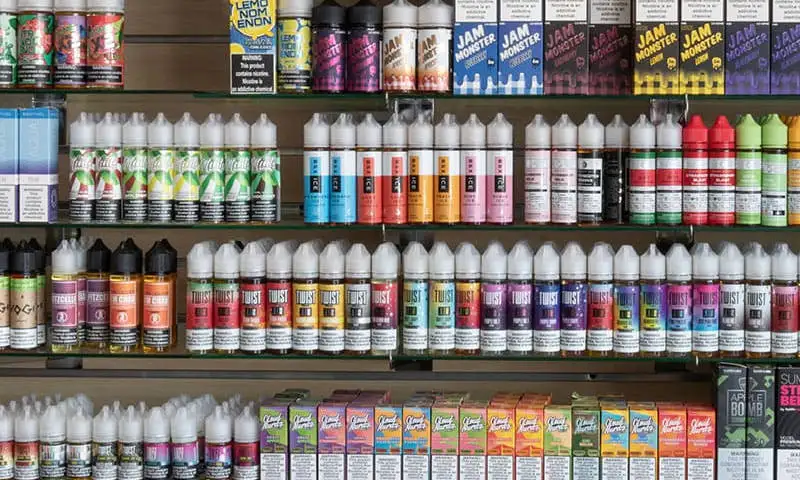
Indonesia has more than 300 registered e-liquid factories and tens of thousands of active SKUs. Local brands hold a genuine structural advantage with deep community roots, a mature consumer base, and tax structures that make it expensive for foreign liquid to compete on price. That advantage is real and it is not going away.
However, a wave of consolidation is coming. The brands that will dominate in 2028 are not treating upcoming regulations as cost, but a shield to lock out competition.
Enforcement That Matters
Many producers are operating under the assumption that because BPOM has not appeared at their door, the compliance deadline is softer than it looks. This assumption is reasonable based on historical patterns in Indonesia. It is also the dangerous take right now.
BPOM does not have a fleet of GC-MS machines positioned to test every bottle. Domestic enforcement will be administrative and reactive. A competitor complaint , or marketplace audit. These trigger scrutiny, and absence of documentation is an immediate administrative problem.
But the enforcement that will determine which brands survive is not coming from BPOM. It is already here, coming from the market itself.
Large domestic distributors are already refusing to carry products without clean documentation. Major vape retailers will ask for ingredient disclosure as a condition of listing. International buyers conducting supplier audits ask for REACH compliance files before they ask for sample. Every one of these commercial enforcement mechanisms operates on its own timeline, and has nothing to do with Indonesian regulatory deadlines.
A producer who waits for BPOM to force compliance is waiting for the least consequential enforcement mechanism to arrive while the commercial ones have already moved on.
The Decision To Make Right Now
Every producer in Indonesia is making a version of the same choice, consciously or not.
One version treats documentation and testing as costs to minimize.
The other version treats documentation and testing as the foundation of the brand itself.
These two versions of the decision produce the same product today. In 2028 they produce completely different businesses.
What the Surviving Brands Are Doing
The first thing is knowing what is in their formula. Every flavor concentrate in production needs a full technical datasheet showing every compound. This document is the starting point for ingredient disclosure to BPOM, for Halal certification, for export market entry, and for any meaningful CMR screening.
The second is active CMR screening against what is actually found in the Indonesian market. Diphenyl oxide, benzaldehyde, estragol, methyl eugenol, and furfural are not theoretical concerns. They are compounds identified repeatedly in flavor samples from Indonesian and Southeast Asian suppliers in testing conducted by certified laboratories. Discovering one of these in your formula before you submit documentation costs you a reformulation. Discovering it during a BPOM audit or a foreign customs check costs you significantly more.
The third is treating the packaging transition as a brand decision, not just a compliance one. The move to 10ml and 20ml formats required by PP 28/2024 forces a label redesign. Producers who use that redesign to communicate quality, are building a visual asset that carries their brand positioning forward.
The fourth is nicotine and base material sourcing with documentation that can actually be submitted. A supplier who cannot provide a Certificate of Analysis showing purity grade and origin is leaving a documentation gap at the most basic level of the formula. With China’s VAT rebate removal raising the cost of Chinese nicotine by 8% to 13%, this is also the moment to diversify the supply chain. The margin protection and the documentation improvement are the same decision.
The fifth is understanding that domestic compliance and export readiness are the same work. The documentation required to meet PerBPOM 18/2025 ingredient disclosure is 90% of what EU REACH compliance requires. Same testing a US or UK distributor will ask for before signing a supply agreement. The producers who have clean documentation are positioned to access that market. Those who do not are watching the opportunity pass.
Bottom Line
Your local authenticity and understanding of the Indonesian palate are invaluable, but they are no longer enough. The market is consolidating. By turning compliance into a marketing asset, and proving to your customers and distributors that your liquids are verified clean and legal, you insulate your brand from regulatory shocks.