In late February 2026, a coordinated military escalation in the Middle East effectively closed the Strait of Hormuz, one of the most critical chokepoints in global maritime trade. Within days, the major shipping lines suspended operations through the Persian Gulf. Within weeks, the ripple effects had reached every corner of the global manufacturing economy, including the Indonesian e-liquid industry.
This is not a temporary disruption waiting to resolve itself. It is a structural shift in how goods move around the world, arriving at exactly the same moment that Indonesia’s own regulatory environment is undergoing its most significant transformation in over a decade. For liquid manufacturers in Indonesia, understanding what is happening and responding to it systematically is the difference between a business that navigates this period well and one that gets caught short.
This article explains the key forces at play, what they mean concretely for Indonesian brewers, and the practical steps that can be taken now to build a more resilient operation.
What Happened at the Strait of Hormuz
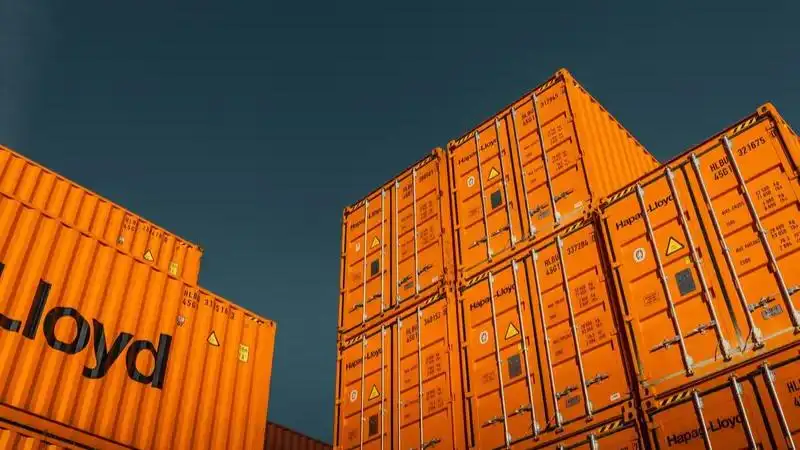
The Strait of Hormuz handles roughly 11% of all global seaborne trade. Before the February 2026 escalation, approximately 153 vessels passed through it every day. By the first week of March, that number had fallen to fewer than 5. Maersk, MSC, Hapag-Lloyd, and CMA CGM all formally suspended Persian Gulf operations. Approximately 170 container ships carrying 450,000 TEUs of cargo were effectively stranded.
The consequences spread outward in several directions simultaneously.
Oil prices spiked past 100 dollars per barrel and peaked above 110 dollars as markets absorbed the loss of roughly 20% of the global oil supply that normally moves through the strait. Higher energy costs function as a tax on everything: factory power, chemical synthesis, refrigeration, and last-mile delivery all became more expensive almost overnight.
Shipping routes from Europe to Asia were forced to divert around the Cape of Good Hope, adding significant time and cost to every journey. A shipment from the United Kingdom to Jakarta that previously took around 20 days now takes between 25 and 37 days. Container rates, which had already been elevated, climbed further. Emergency bunker surcharges were introduced on top of existing freight rates. War risk surcharges appeared on air cargo routes passing near conflict zones.
For an industry built on relatively fast inventory turnover and a globalized supply of components, this created an immediate gap between supply and demand that will take months to normalize.
What This Means for Indonesian Brewers Specifically
Indonesian liquid manufacturers depend on four core inputs: propylene glycol, vegetable glycerin, nicotine, and flavor concentrates. Each of these is being affected by the current environment in a different way.
Propylene glycol and vegetable glycerin prices in Southeast Asia remain higher than in Northeast Asia, running at roughly 1.19 dollars per kilogram compared to 0.95 dollars in China. VG supply is also sensitive to palm oil market movements, and crude palm oil reference prices in Indonesia rose to over 938 dollars per metric ton in March 2026, adding further pressure to input costs.
Nicotine supply from China, which is the primary source for most Indonesian brewers, is being affected by a significant policy change. China cancelled its 13% VAT export rebate on nicotine products effective April 1, 2026. This rebate had historically functioned as a cost subsidy that kept Chinese nicotine competitively priced on the global market. Without it, export costs from China are expected to rise by between 8% and 15%, translating directly into higher input costs for brewers who have not already diversified their sourcing.
Flavor concentrates present perhaps the most complex challenge. The premium end of the Indonesian e-liquid market has long depended on Overseas flavor houses for complex profile development and consistent quality. Major suppliers including Givaudan from Switzerland and Symrise and Hertz and Selck from Germany provide formulations that are difficult to replicate domestically. These suppliers are themselves under cost pressure, with energy and input costs rising, and the logistics of getting their products to Indonesia have become significantly more expensive and less predictable.
The Regulatory Layer on Top of All This
The supply chain disruption is arriving at a moment when Indonesian brewers are also managing the most demanding domestic regulatory transition in the industry’s history.
PP 28/2024 and PerBPOM 18/2025 take full effect on July 26, 2026, introducing mandatory ingredient disclosure to BPOM, additive safety testing requirements, packaging size restrictions to 10ml and 20ml formats, a minimum purchase age of 21, and significant advertising restrictions. Each of these changes requires operational adjustments, and several of them require investments of time and documentation that cannot be rushed.
The mandatory Halal certification deadline of October 17, 2026 adds another layer. From that date, flavoring agents and chemical goods used in consumer products must carry Halal certification or face exclusion from major retail and e-commerce platforms. Every component in an e-liquid formula, from base PG and VG to complex botanical extracts in flavor concentrates, needs to be traceable to its origin and certifiable under the Halal framework.
There is also the ongoing proposal from the National Narcotics Agency to include vaporizer components in a broad narcotics and psychotropics bill, driven by findings that a significant number of vape liquid samples tested in Indonesia contained illegal substances including synthetic cannabinoids and methamphetamine. While this proposal has not yet been enacted, it creates reputational and regulatory risk for the entire industry and strengthens the case for manufacturers who can demonstrate rigorous internal testing and clean supply chains.
What a More Resilient Supply Chain Actually Looks Like
The response to all of this is planning. The brewers who will be in the strongest position a year from now are those who are making deliberate changes to how they source, stock, and document their inputs.
The first area to address is inventory strategy. The era of just-in-time importing from European and other overseas flavor suppliers is effectively over for the near term. Lead times have lengthened, costs have risen, and the predictability that made lean inventory sensible no longer exists. Brewers who are still operating on minimal stock buffers are one shipping disruption away from a production stoppage. Moving to a higher inventory buffer of four to eight weeks of critical inputs, particularly flavor concentrates, is a straightforward adjustment that significantly reduces operational vulnerability.
The second area is sourcing diversification. Dependence on a single supplier or a single country of origin for any critical input is a structural risk that the current environment has made very visible. For nicotine, exploring Indian suppliers alongside Chinese ones provides a hedge against the VAT rebate removal and any further Chinese policy changes. For base materials, understanding which regional suppliers can provide USP-grade PG and VG at acceptable quality and cost gives you options that a single-supplier relationship does not.
For flavor concentrates, the diversification question is more nuanced because quality and compliance documentation are harder to verify quickly. The right move here is not to simply find cheaper alternatives, but to identify suppliers who can provide both the quality profile you need and the technical documentation that PerBPOM 18/2025 now requires. A flavor that arrives without a complete chemical compound datasheet is a liability in the current regulatory environment, regardless of how good it tastes.
The third area is logistics planning. Air freight has become the de facto contingency option for time-sensitive inputs, and building it into your cost planning rather than treating it as an emergency expense is a more honest reflection of the current reality. Air transit from Europe to Jakarta runs at seven to nine days, compared to the 25 to 37 days now typical for sea freight via the Cape of Good Hope. The cost difference is real, but so is the value of supply continuity when you have production commitments and retail deadlines to meet.
Understanding which of your inputs genuinely justify air freight pricing and which can tolerate longer sea freight lead times with appropriate buffer stock is a planning exercise worth doing systematically rather than under pressure.
The fourth area is documentation and compliance preparation. This is the area most easily deferred and the one that creates the most serious problems when it is. The ingredient disclosure requirements of PerBPOM 18/2025, the Halal certification process, and the additive safety testing requirements all take time to complete properly. Brewers who begin this process now, while there is still time to identify and address any formula-level issues, are in a fundamentally different position from those who begin it in June when the deadline is weeks away.
Starting with a complete inventory of what is in every flavor you currently use is the logical first step. From there, you can assess which formulas are already compliant, which require reformulation, and which suppliers are equipped to support the documentation requirements you now have to meet.
The Competitive Opportunity in All of This
It is worth stepping back and noting something that tends to get lost in the stress of managing multiple pressures simultaneously. The same forces that are making life harder for Indonesian brewers are creating a meaningful competitive opening.
China’s removal of the VAT export rebate is already incentivizing a shift in manufacturing toward Indonesia, particularly in free-trade zones like Batam. Indonesian producers who are compliant, documented, and able to demonstrate clean supply chains are well positioned to absorb that demand. The consolidation that tighter regulation typically produces means that manufacturers who navigate this period successfully emerge with a stronger market position than they had going in.
Export markets that have long been out of reach because of documentation requirements are becoming more accessible to Indonesian manufacturers who are investing in compliance infrastructure now. Singapore, Australia, and the broader ASEAN region represent significant demand for products that can demonstrate regulatory credibility.
The manufacturers who will capture that opportunity are those who treat the current disruption not as something to survive but as a forcing function for building the kind of operation that can compete in a more demanding market.
Where Arkadia Comes In
We are the Indonesian representative of European based flavor house with a certified R&D laboratory serving more than 50 countries. We understand the current supply chain environment because we are operating directly within it.
One of the things that distinguishes how we work is that we import flavor concentrates from Europe via air freight as a standard practice rather than an emergency measure. It is the only logistics model that provides genuine supply continuity.
Beyond logistics, every flavor we supply comes with complete technical documentation. In the context of PerBPOM 18/2025 ingredient disclosure requirements. That’s what you need to operate legally and to access the markets you are targeting.
The supply chain is more complex than it was a year ago. The regulatory environment is more demanding. The brewers who respond to that reality with clear thinking are the ones who will be in the best position when the dust settles.