Indonesia is home to around 75 million smokers. More than 59% of adult men smoke. Every year, somewhere between 240,000 and 300,000 Indonesians die from tobacco-related illness. The government collects USD 12.9 billion in tobacco excise tax annually, while independent research puts the total economic cost of smoking, including healthcare and lost productivity, at more than USD 24 billion per year.
The country has not ratified the WHO Framework Convention on Tobacco Control. It is the only country in Southeast Asia that has not. It has no meaningful restrictions on tobacco advertising. Cigarettes can still be bought one stick at a time at kiosks next to schools. And the companies profiting most from all of this are not Indonesian. They are Philip Morris International from the United States, British American Tobacco from the United Kingdom, and Japan Tobacco International from Japan.
This is not an accident. It is the result of a systematic and decades-long process of corporate acquisition, political influence, and regulatory capture. Understanding how it happened is the first step toward understanding what the independent vape industry in Bandung and across Indonesia is actually up against.
How Three Global Companies Came to Own the Indonesian Cigarette Market
For most of the 20th century, Indonesia’s tobacco industry was built and owned by Indonesian families. The biggest names were household names: Sampoerna, founded in 1913 by Liem Seeng Tee in Surabaya; Bentoel, one of the country’s oldest tobacco companies; and the remaining major players Gudang Garam and Djarum, which remain locally controlled.
The shift began in 2005. Philip Morris International paid USD 5.2 billion to acquire what became a 97.95% stake in Sampoerna, the country’s largest cigarette company, through a combination of direct purchase and a public tender offer. At the time of the sale, Sampoerna controlled close to 20% of the Indonesian cigarette market. The company was not in financial trouble. It was at its peak. The founding family, led by Putera Sampoerna representing the third generation, chose to sell.
Today PMI holds 92.5% of Sampoerna after a 2015 rights issue required to meet stock exchange rules, with the remainder publicly traded. Sampoerna’s brands include Dji Sam Soe, Sampoerna A, and Marlboro.
In 2009, British American Tobacco paid USD 494 million for an 85% initial stake in Bentoel, Indonesia’s fourth largest cigarette company, then completed a public tender offer to bring its total stake to 99.74%. BAT’s stated reason for the acquisition was to enter the kretek market, where it had no presence. Indonesia’s kretek segment accounts for over 90% of domestic cigarette consumption.
In 2017, Japan Tobacco International acquired PT Karyadibya Mahardhika and its distributor PT Surya Mustika Nusantara for USD 677 million, giving it immediate nationwide scale in the Indonesian kretek market. Including the debt taken on as part of the deal, the total transaction value was closer to USD 1 billion.
The three companies now collectively control the majority of machine-made cigarette volume in Indonesia. The remaining major domestic players are Gudang Garam and Djarum, both still Indonesian-owned.
Why Indonesia Was the Target
The answer is straightforward. By the time these acquisitions happened, cigarette consumption in Europe, North America, and Australia was falling. Plain packaging laws, advertising bans, tax increases, and cultural shifts had turned what were once growth markets into declining ones. The global tobacco industry needed somewhere to grow.
Indonesia offered everything these companies were losing elsewhere. A huge population with high male smoking rates. Minimal advertising restrictions. A complex, multi-tiered excise tax system that kept cigarettes affordable. No FCTC ratification. A healthcare system not yet equipped to mount a meaningful public health response. And an established cultural relationship between tobacco and daily life that had been built over a century.
The acquisitions were not opportunistic. They were strategic. The world’s most powerful tobacco companies looked at Indonesia and saw a market that could sustain their global revenue as the rest of the world turned against them.
The Tax System That Keeps Cigarettes Cheap
One of the most important tools maintaining Indonesia’s smoking rates is not advertising. It is the excise tax structure itself.
Indonesia’s tobacco excise system has eight tiers, based on product type, production method, and price range. Machine-made kretek cigarettes are taxed at very different rates from hand-rolled ones. Tier 1 machine-made products from the largest companies carry the highest excise rates. Cheaper tiers, used by smaller producers, carry rates that can be less than one tenth of those applied to the top tier.
When the government raises excise taxes, smokers do not quit. They switch to cheaper products. A 2025 study by the Center for Indonesia’s Strategic Development Initiatives found that 35.73% of smokers switched to cheaper alternatives when prices rose. The system was originally designed to protect small producers, but in practice it guarantees there is always an affordable option, which removes the public health impact that higher prices are supposed to have.
The government collected IDR 216.9 trillion, or approximately USD 12.9 billion, in tobacco excise in 2024. The estimated total economic cost of smoking that same year, counting healthcare spending and lost productivity, ran to multiples of that figure. Indonesia is taxing tobacco and losing money on the trade.
Children Are the Market
The tobacco industry’s long-term strategy anywhere in the world has always been the same: replace the smokers who die with new ones. In Indonesia, that replacement pool is children.
The 2023 Indonesia Health Survey found 5.2 million teenage and preadolescent smokers. The Tobacco Atlas puts youth smoking prevalence at 8.48%. A government target set in the National Medium-Term Development Plan aimed to reduce child smoking to 5.4%. That target has not been met.
The mechanisms are not complicated. Cigarettes are available as single sticks at kiosks throughout the country, including those close to schools. The practice is called ketengan. Although PP 28/2024 prohibits single-stick sales, enforcement on the ground remains minimal. A child can buy a cigarette for the price of a small snack.
Tobacco advertising remains pervasive in public spaces and social media, using imagery designed to appeal to younger consumers. More than 70% of adult men smoke, which means smoking is normalized in the home, at social gatherings, and in public spaces children move through every day.
What Smoking Costs Indonesia’s Healthcare System
BPJS Kesehatan, Indonesia’s national health insurance system, is in deficit. The primary driver is the cost of treating non-communicable diseases including heart disease, stroke, cancer, and chronic respiratory conditions, all of which are caused or worsened by tobacco.
A peer-reviewed study published in the medical literature found that BPJS allocated between IDR 10.4 trillion and IDR 15.6 trillion to cover healthcare costs attributable to smoking in 2019 alone, representing between 61% and 91.8% of that year’s total BPJS deficit. The numbers have grown since.
More than 70% of cancer patients in Indonesia are diagnosed at stage three or four, when treatment options are limited and outcomes are poor. The country has approximately 140 medical oncologists and 200 surgical oncologists for a population of over 270 million people. An estimated 90% of cancer patients outside Jakarta cannot access radiotherapy. The people dying are not dying because treatment does not exist. They are dying because the system built to protect them was not built to cope with the scale of what tobacco has done to this country.
The Corruption Layer
In February 2026, Indonesia’s Corruption Eradication Commission named Budiman Bayu Prasojo, head of the Intelligence Section for Excise Enforcement and Investigation at the Directorate General of Customs and Excise, as a suspect in a corruption probe. Investigators found that cigarette importing companies had provided bribes and gratuities to customs officials to manipulate excise payments and import clearance. Approximately IDR 5.19 billion in cash was seized from a safe house in Ciputat. One company identified in the investigation, Blueray, had its owner reportedly flee during initial arrests.
This is not an isolated incident. It is the visible surface of a system where the financial stakes are so high that regulatory capture extends from the lobbying rooms of parliament down to individual enforcement officials.
Indonesia Has Not Ratified the FCTC. Here Is Why.
The WHO Framework Convention on Tobacco Control is the international treaty that establishes minimum standards for tobacco regulation. Every country in Southeast Asia has ratified it. Indonesia has not.
The official argument is national sovereignty and the protection of tobacco farmers. The real explanation is that the tobacco industry has been more effective at shaping domestic political outcomes than the public health community. Responsibility for tobacco policy in Indonesia is fragmented across nine government ministries. The Ministry of Finance and the Ministry of Industry, both of which have strong interests in tobacco revenue and industrial output, consistently outweigh the Ministry of Health when policies conflict.
This fragmentation is not accidental. An industry with the resources of PMI, BAT, and JTI operating in a market where regulatory consolidation would hurt their business has every incentive to ensure that consolidation never happens. And for decades, it has not.
The Bandung Vape Scene and Why It Matters
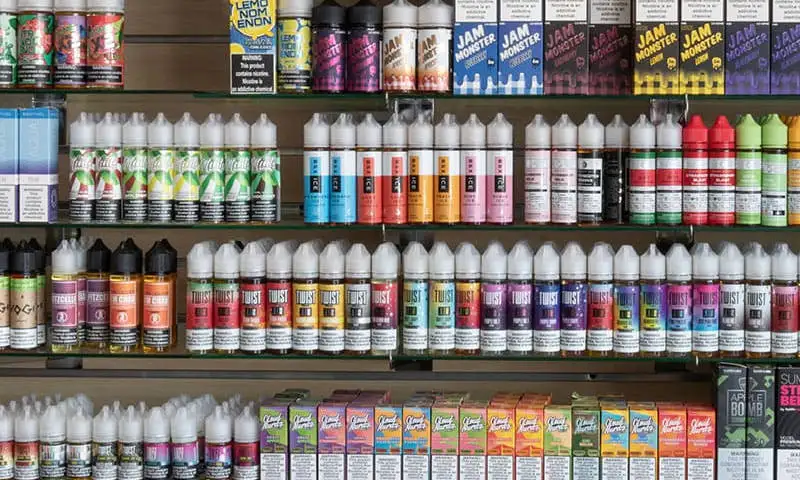
In Bandung and across Indonesia, an independent vape culture has developed that is unlike anything the tobacco industry built. Small producers, known locally as brewers, developed their own flavor profiles, invested in their own equipment, built their own communities, and created a market that reached a value of nearly USD 240 million by 2021.
These are not subsidiaries of global corporations. They are local businesses. Many of the people running them started because they wanted to quit smoking and found vaping more effective than anything else they had tried. The products they make are positioned explicitly as alternatives to combustible tobacco, aimed at adult smokers who are looking for a way out.
The tension between this community and Big Tobacco is real. PMI has entered the heat-not-burn market through IQOS, investing more than USD 186 million in manufacturing facilities in Karawang. The global tobacco companies understand that the combustible cigarette market will eventually decline, and they are positioning themselves in the next market before it fully arrives, using the same resources and distribution networks they built on conventional tobacco.
An independent brewer in Bandung does not have those resources. But they do have things the global companies cannot easily replicate: genuine product knowledge, a direct connection to their consumer community, and the trust that comes from being part of the same culture as the people buying their products.
What the Bandung Brewers Are Actually Up Against
The regulatory environment heading into the second half of 2026 is the most challenging the independent vape industry has faced.
PP 28/2024 and PerBPOM 18/2025 take full effect on July 26, 2026. Mandatory ingredient disclosure to BPOM, additive safety testing with cross-laboratory verification, packaging restrictions to 10ml and 20ml formats, a minimum purchase age of 21, and advertising bans are all coming simultaneously. Each of these individually is manageable. Together, in a short timeframe, they represent a significant compliance burden.
The BNN proposal to classify vape devices under narcotics and psychotropics legislation is the more existential threat. The BNN has cited laboratory tests finding 35 out of 341 vape liquid samples containing illegal substances including synthetic cannabinoids and methamphetamine. The response proposed is a total ban. Independent producers point out that this conflates products made by compliant, documented manufacturers with illicit drug-laced liquids, and that a total ban would eliminate the legitimate industry while the drug-laced products would simply find other distribution channels.
The suspicion within the independent industry that this narrative is being amplified by interests that would benefit from eliminating competition from independent producers is understandable given the history. It is also impossible to prove. What is clear is that the legitimate independent vape industry needs a different strategy than simply hoping the regulation goes away.
What Independent Producers Need to Do to Actually Have a Chance
Compliance is not optional and it is not the enemy. Compliant producers are protected. Non-compliant ones are exposed, and a ban justified by drug-laced products from non-compliant operations will sweep away compliant ones too if the industry cannot clearly demonstrate the distinction.
The first priority is documentation. Every flavor in every product needs compound-level documentation. Every formula needs to be verified by GC-MS testing. Every batch needs to be traceable. This is what separates a legitimate producer from an illicit one in the eyes of a regulator, a buyer, and a court. Producers who cannot demonstrate this are a liability to the entire industry’s case for continued existence.
The second priority is unity. The independent vape industry in Indonesia is fragmented. Individual brewers protecting individual formulas and individual market positions are easy to dismiss and easy to regulate out of existence. A credible industry association that can present documented safety data, engage with BPOM on the terms of PerBPOM 18/2025, and make the public health case for regulated vaping as a tobacco harm reduction tool is something that cannot be ignored. This conversation is happening in the UK, Australia, and New Zealand. It needs to happen in Indonesia.
The third priority is the public health argument. The tobacco industry cannot make this argument. A company that profits from selling combustible cigarettes to 75 million Indonesians, including children, cannot credibly position itself as a public health partner. Independent vape producers can make that argument, but only if they can back it up with documented safety, transparent ingredients, and a clear message about who their products are for and who they are not for.
The fourth priority is export readiness. The domestic market is under pressure. Export markets in Singapore, Australia, and other ASEAN countries represent real demand for products that can demonstrate regulatory credibility. Indonesian brewers who build compliance infrastructure now are positioned to access those markets. Those who do not are not.
The vape industry in Indonesia did not create the public health crisis that Big Tobacco built over a century. But it is operating in the shadow of that crisis and will be judged by it. The only way through is to be demonstrably different, and to be able to prove it.